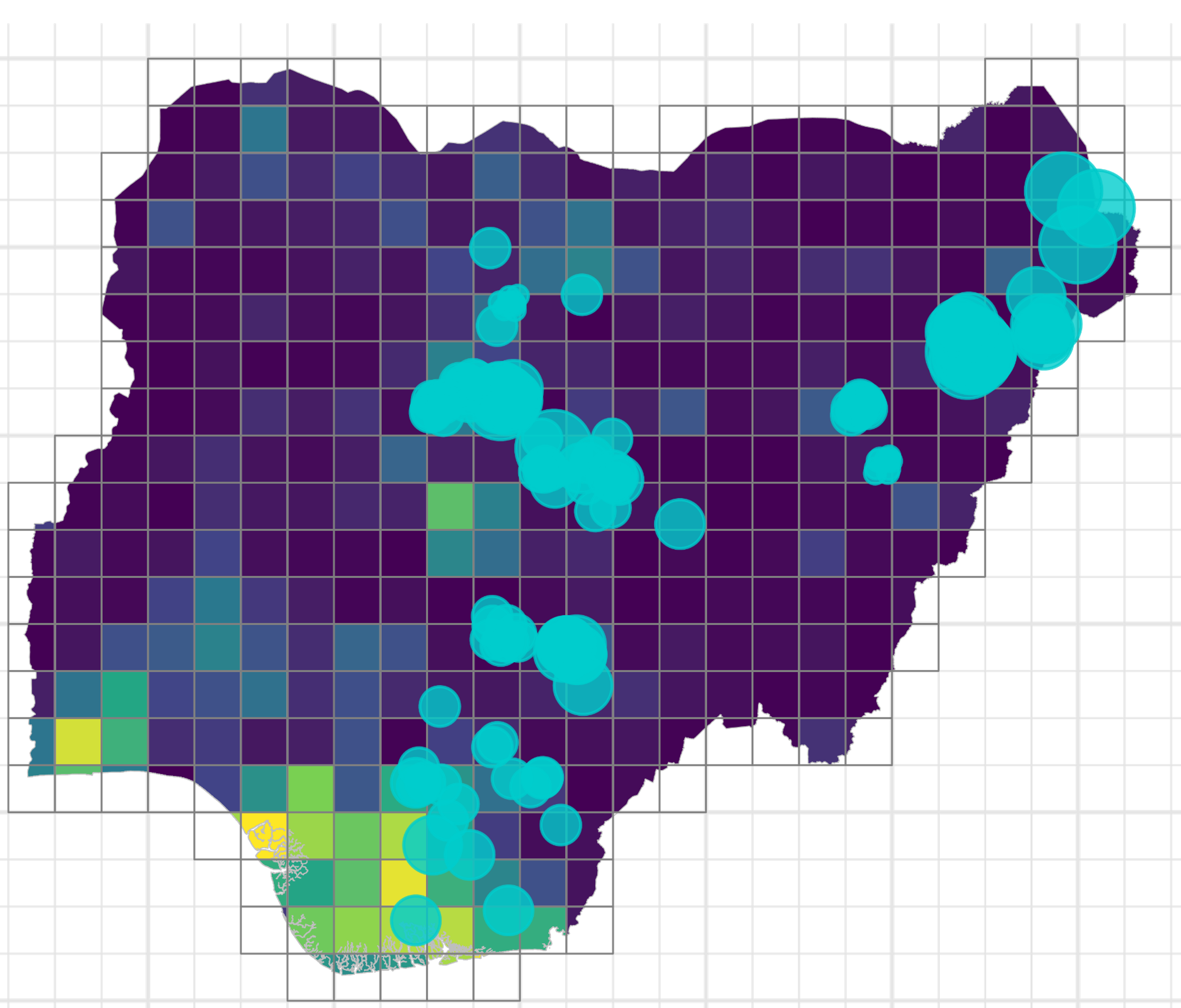
The Political and Economic Consequences of Ethnic Cleansing in Africa
Does ethnic cleansing facilitate economic development by increasing local homogeneity, or undermine it by destroying existing diversity?
We address this question by analyzing the local economic and political consequences of ethnic cleansing over time.
Combining village-level data on ethnic cleansing with satellite images of nightlight emissions across 18 Sub-Saharan African countries (1992–2021), we find that ethnic cleansing initially reduces economic activity in some contexts, but is generally followed by recovery above pre-treatment levels.
These effects are mostly driven by state-affiliated perpetrators of ethnic cleansing. In addition, ethnic cleansing is associated with increased government support among co-ethnics of perpetrators, but less political engagement among targeted groups.
We test the mechanisms behind this “two-sided” effect with case evidence from Nigeria, Uganda, and Mali. Our results show that ethnic cleansing increases local ethnic homogeneity and state infrastructure in affected areas, which may contribute to economic recovery and government support among perpetrators’ co-ethnics.
By highlighting that ethnic cleansing may deepen economic and political inequalities between ethnic groups, our findings have important policy implications for humanitarian aid, development, and peacebuilding.