How Ethnic Inequalities affect Local Civilian Protection by UN Peacekeepers
Although UN peacekeepers frequently operate in ethnically divided societies, existing research has paid limited attention to how ethnic inequalities shape peacekeepers’ ability to protect civilians.
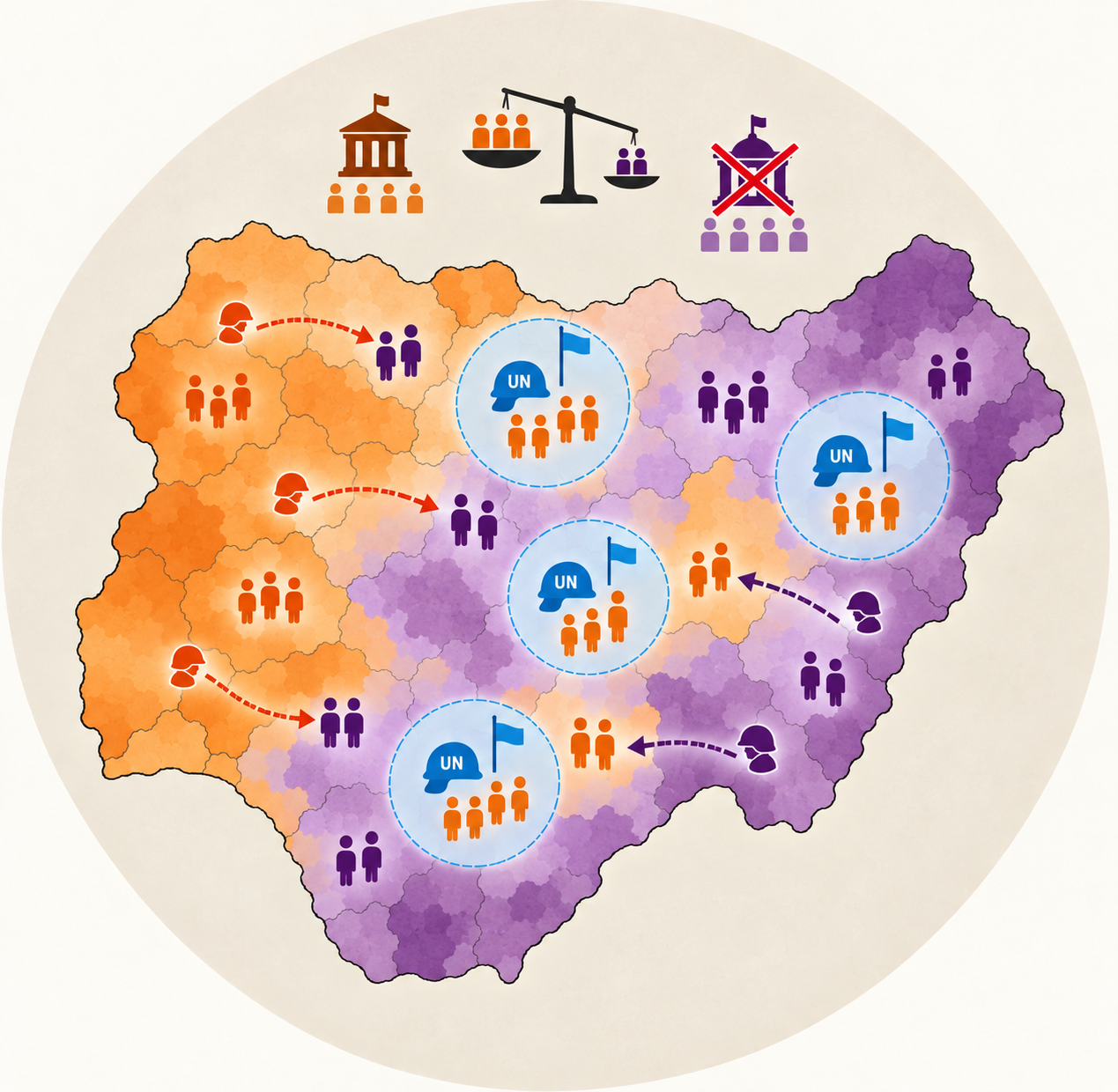
I address this gap and argue that perpetrators with access to state power can constrain peacekeepers’ ability to protect marginalized ethnic communities.
Combining geo-located peacekeeping deployments with data on ethnic one-sided violence across UN missions from 1999 to 2020, I find that peacekeepers reduce violence by politically marginalized perpetrators against groups represented in government, but not violence perpetrated by politically powerful groups.
These findings identify ethnic power inequalities as a key constraint on international civilian protection. Such limitations may reinforce existing inequalities in post-conflict societies and highlight the importance of local-level reconciliation efforts, including intergroup dialogue and mediation.