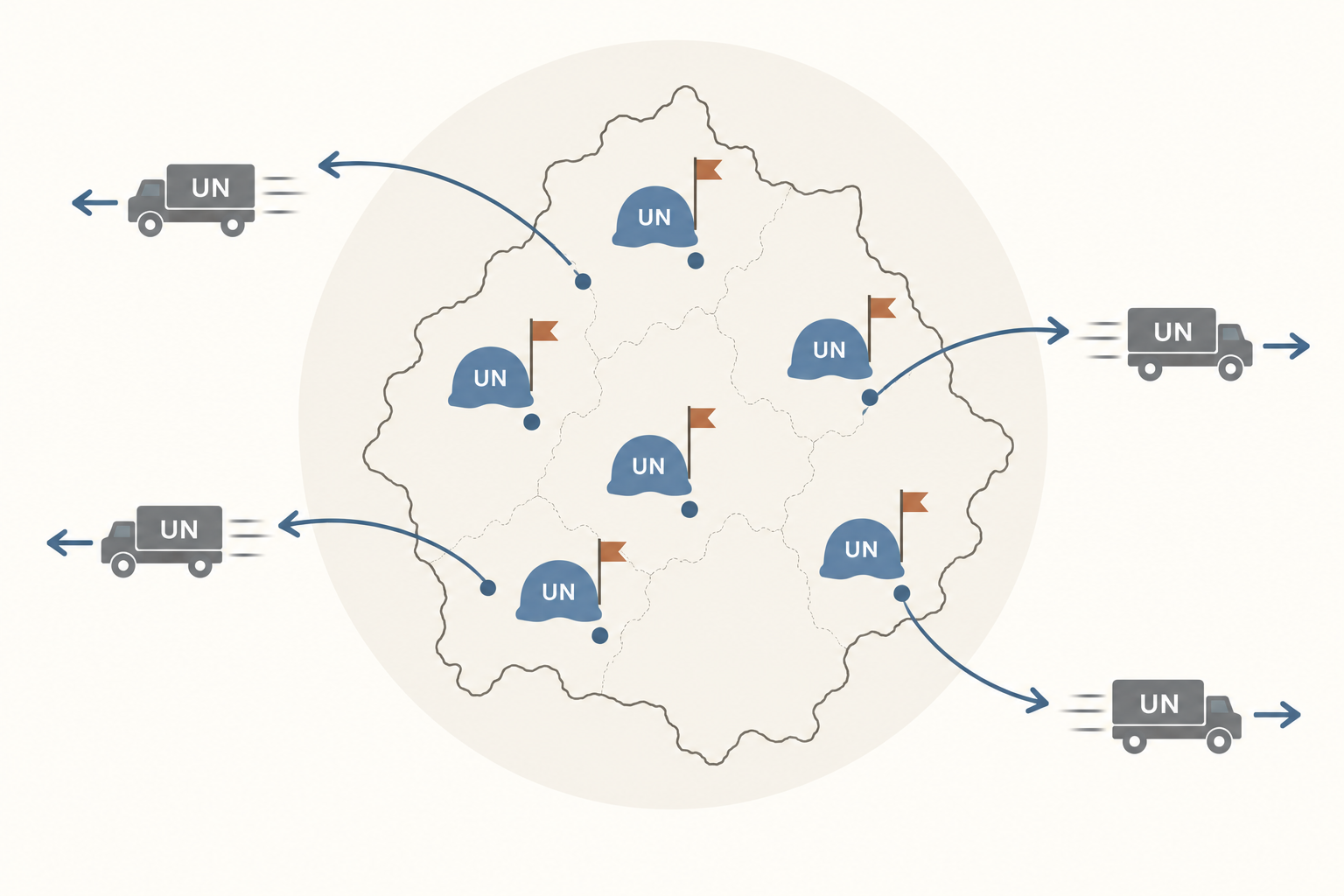
Withdrawal of UN Peacekeeping Operations and Violence During Electoral Periods
How does the phased withdrawal of United Nations peacekeeping operations (PKOs) influence violence during elections?
Many PKOs recently ended and peacekeeping personnel numbers are decreasing, yet we know little about the effects of peacekeepers’ exit.
In this article, we address this gap and examine how peacekeepers’ withdrawal affects violence during electoral periods.
We focus on electoral periods because elections are both often-desired intervention endpoints and violence-prone moments in post-war trajectories.
We argue that electoral violence increases shortly after a reduction in PKO troops because shortfalls in external oversight and security assistance reduce costs for organizing violence and open opportunities for pursuing a coercive electoral strategy. However, violence-inducing exit effects are likely short-lived due to adaptation by domestic security forces or peacekeepers who remain in the host country.
We examine our argument across electoral periods and first-order administrative units of all African countries hosting a PKO (2001–2017).
Controlling for violence trends prior to peacekeepers’ exit, two-way fixed effects models suggest that a local reduction in PKO troops is not associated with subsequent increases in electoral violence. However, withdrawal incidents lead to spikes in political violence more broadly defined.
Our results confirm worries that downsizing during election times may endanger security gains in post-war countries.