Add Fuel to Fire? The Transnational Effects of Ethnic Cleansing on Armed Conflict
How does ethnic cleansing affect the risk of conflict within and across states?
While existing research focuses on the impact of ethnic cleansing for recipient areas of displaced people, we know little about its consequences in areas from which groups are displaced.
To fill this gap, I explore how ethnic cleansing shapes the risk and intensity of armed conflict in locations where ethnic cleansing has taken place.
I argue that ethnic cleansing generates grievances and strengthens in-group cohesion in areas from which groups are displaced, facilitating violent mobilization.
Taking a mixed-methods approach, I combine quantitative analysis of ethnic group settlements in 41 states across Africa, the Middle East, and Asia (1990–2021) with process-tracing in Myanmar, Sudan, and the Israeli-Palestinian conflict.
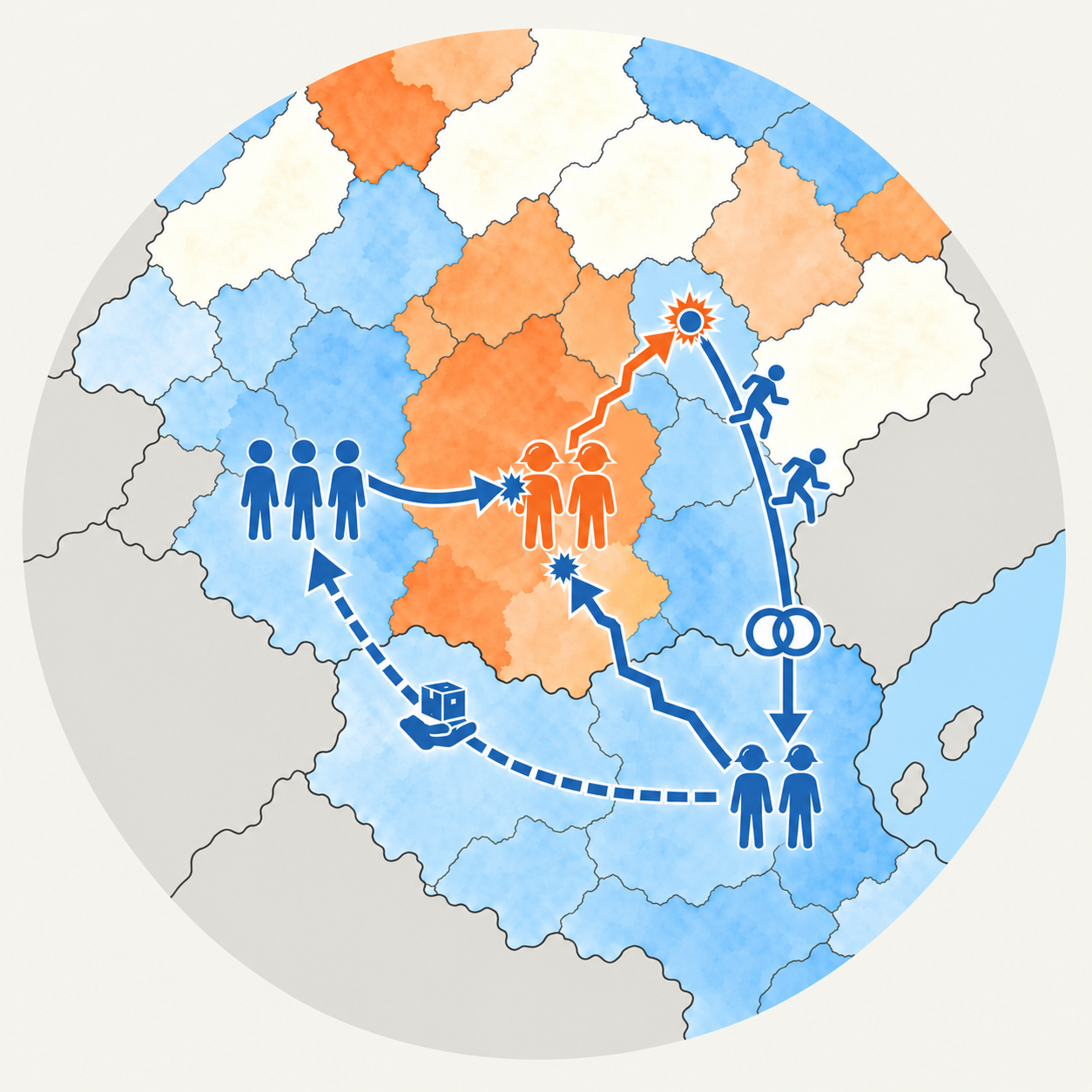
I find greater conflict intensity in areas targeted with ethnic cleansing, partly driven by external support to targeted groups from co-ethnics in neighboring states. In addition, ethnic cleansing can contribute to the internationalization of conflict by increasing the risk of interstate disputes with kin states.
Taken together, ethnic cleansing may result in a spiral of violence that could destabilize coercive regimes, exacerbating transnational security threats that motivate governments to perpetrate ethnic cleansing in the first place. These findings show that transnational networks not only shape who is targeted with ethnic violence but also its whether conflict subsequently escalates, highlighting their broader implications for international security.