How Ethnic Cleansing Affects Collective Identities Across Borders
How does ethnic cleansing reshape affected groups’ identities and attitudes?
While conflict research has paid increasing attention to the causes of ethnic cleansing, its social and political consequences for affected communities remain underexplored.
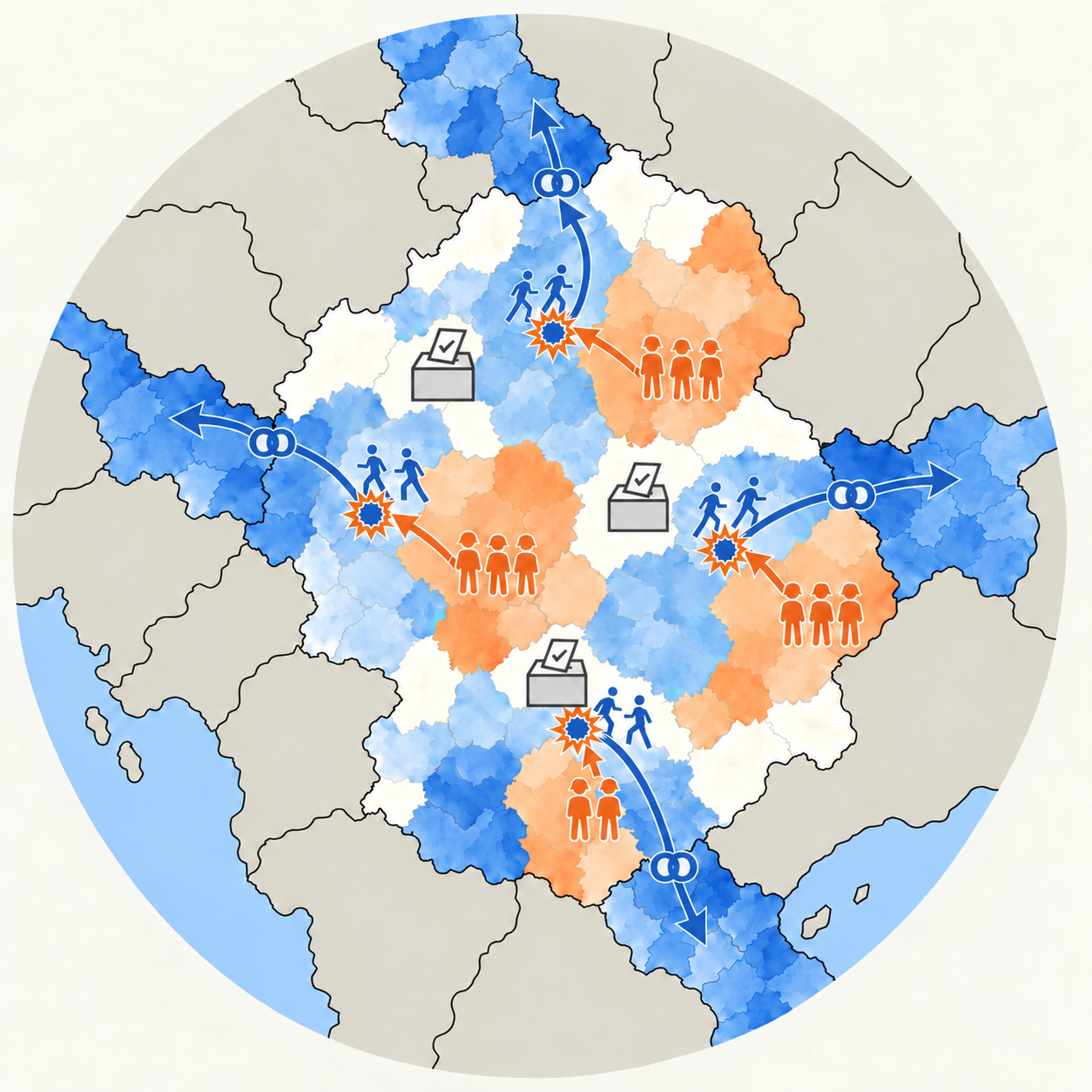
Addressing this gap, I argue that ethnic cleansing reshapes relations between ethnic groups and the state in two ways: whereas co-ethnics of ruling elites become more supportive of governments that distribute public goods to cleansed areas, targeted groups become less attached to the state, and identify more with ethnic communities across borders.
Combining a novel measure of local exposure to ethnic cleansing with geo-located survey data in Africa (2005–2021), I show that ethnic cleansing strengthens ethnic identification and anti-government attitudes among co-ethnics across international borders.
These findings contribute to literature on transnational politics and identity formation by showing that cross-border ethnic ties are not simply a static structural characteristic. Rather, experiences of violence can reinforce transnational ethnic identities and alter their political meaning relative to the state.