Research
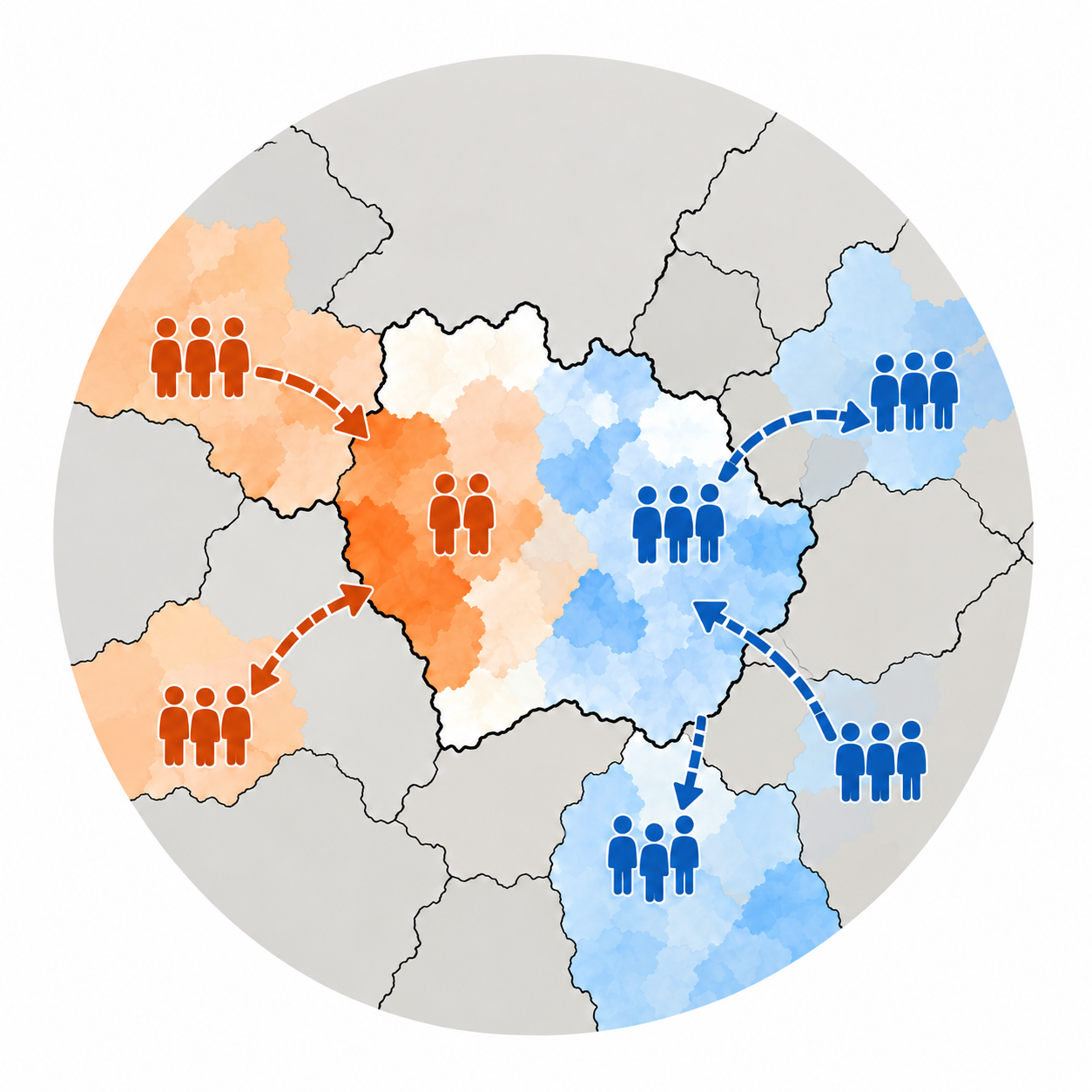
My research examines transnational identity politics, ethnic violence, and post-conflict peacebuilding.
I explore these topics combining geo-spatial data with quantitative causal inference and mixed-methods tools.
Using these techniques, I help researchers and policymakers better understand:
• How ethnic identities become salient across borders
• When political actors mobilize them for violence
• How they shape subsequent prospects for peace
Transnational identity politics
With polarization on the rise, ethnic violence is one of the most pressing challenges in today’s world.
Rather than being contained within states, many affected communities span international borders, creating networks that connect governments, armed actors, and civilians across countries.
In my dissertation, The Causes and Consequences of Ethnic Cleansing: A Cross-Border Perspective, funded by the Swiss National Science Foundation, I examine the transnational causes and consequences of ethnic violence, with a special focus on ethnic cleansing.
To investigate how transnational ethnic networks shape the risk of ethnic cleansing and its political consequences, I collect new geo-located data on ethnic cleansing across Africa, the Middle East, and Asia from 1990 to 2021 (Geo-Located Ethnic Forced Displacement Dataset (GeoEFD)).
I combine this dataset with maps of group settlements and geo-located surveys in a mixed-methods approach, using causal inference, spatial analytics, and process-tracing.
Three main findings:
Ethnic groups with transnational links face a higher risk of ethnic cleansing, especially when they make claims for self-determination
Ethnic cleansing can strengthen ethnic identities across international borders and reduce attachment to national governments
External armed support can intensify conflict in areas targeted by ethnic cleansing and trigger interstate disputes with kin states
Key take-aways:
• Research: Transnational ethnic identities are not static but can be activated by nationalist claims and reinforced through experiences of violence
• Policy: Addressing transnational networks is relevant for mitigating the risk of ethnic violence and improving intergroup relations in its aftermath
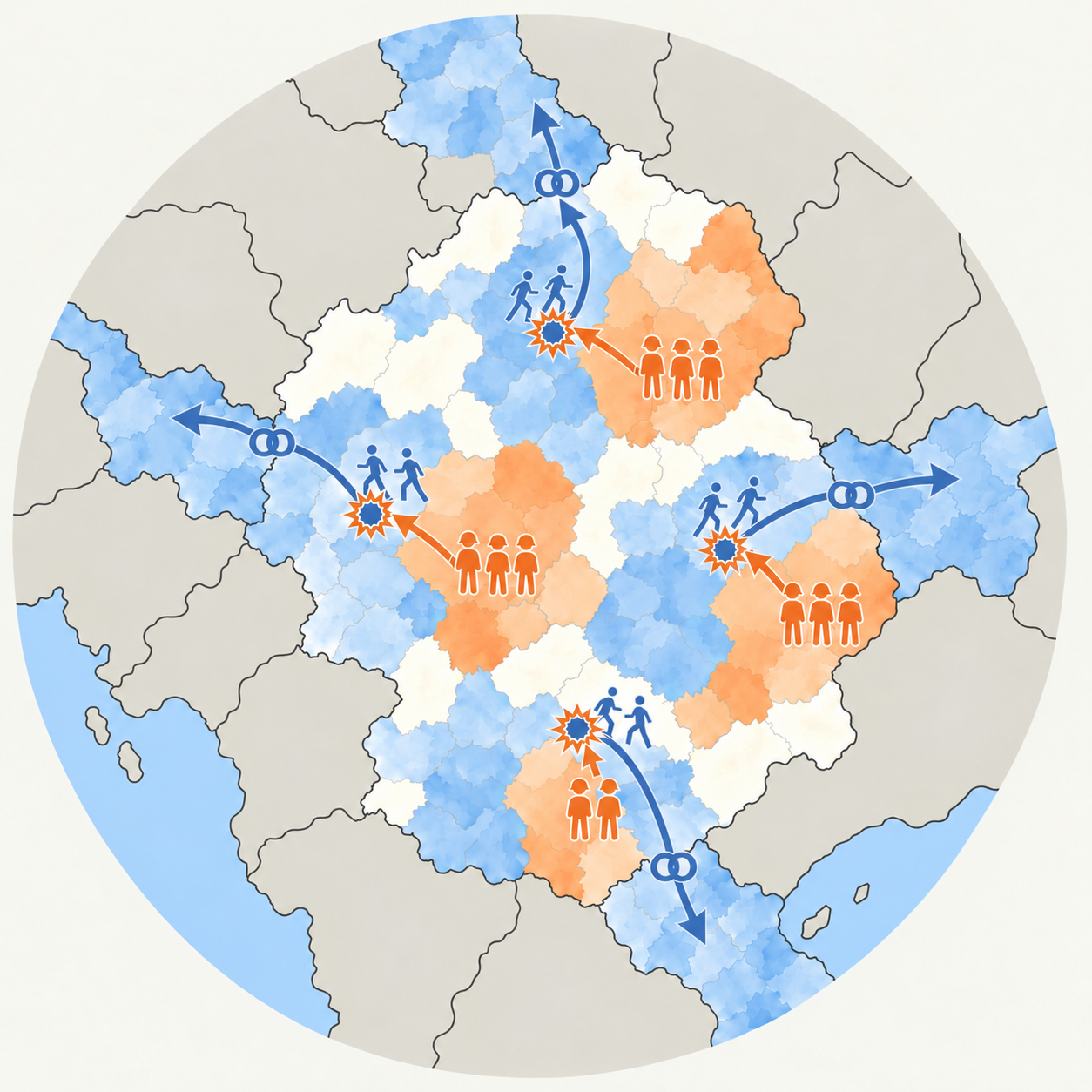
Cross-border ethnic ties and ethnic cleansing
Why do some ethnic groups face a greater risk of ethnic cleansing? This article examines how political exclusion and cross-border ties shape governments’ incentives for forced removal.
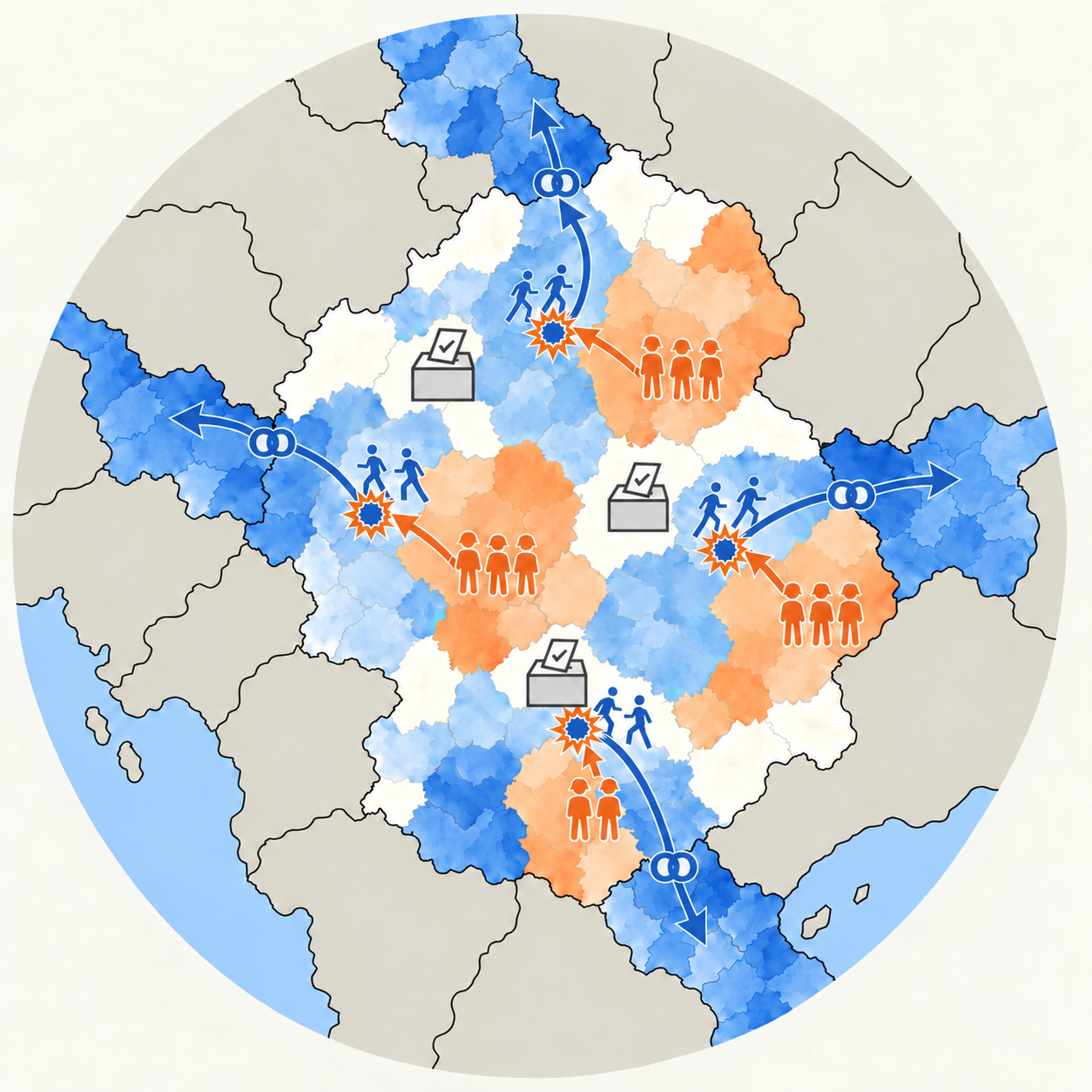
Ethnic identities and political attitudes after ethnic cleansing
How does ethnic cleansing reshape affected groups' identities and political attitudes? This project examines the social and political consequences for affected communities using geo-located survey data.
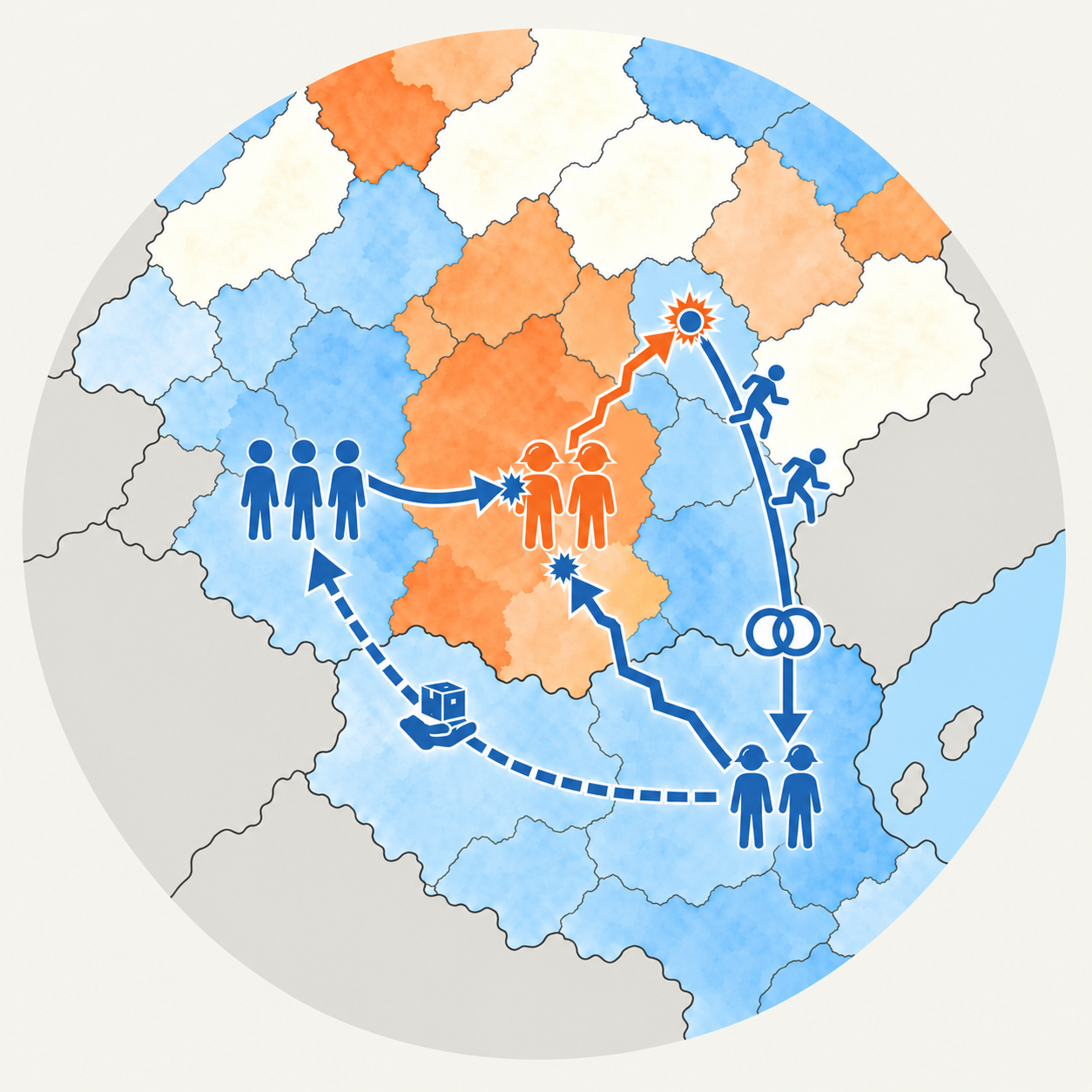
Ethnic cleansing and armed conflict
Why do some ethnic groups face a greater risk of ethnic cleansing? This article examines how political exclusion and cross-border ties shape governments’ incentives for forced removal.
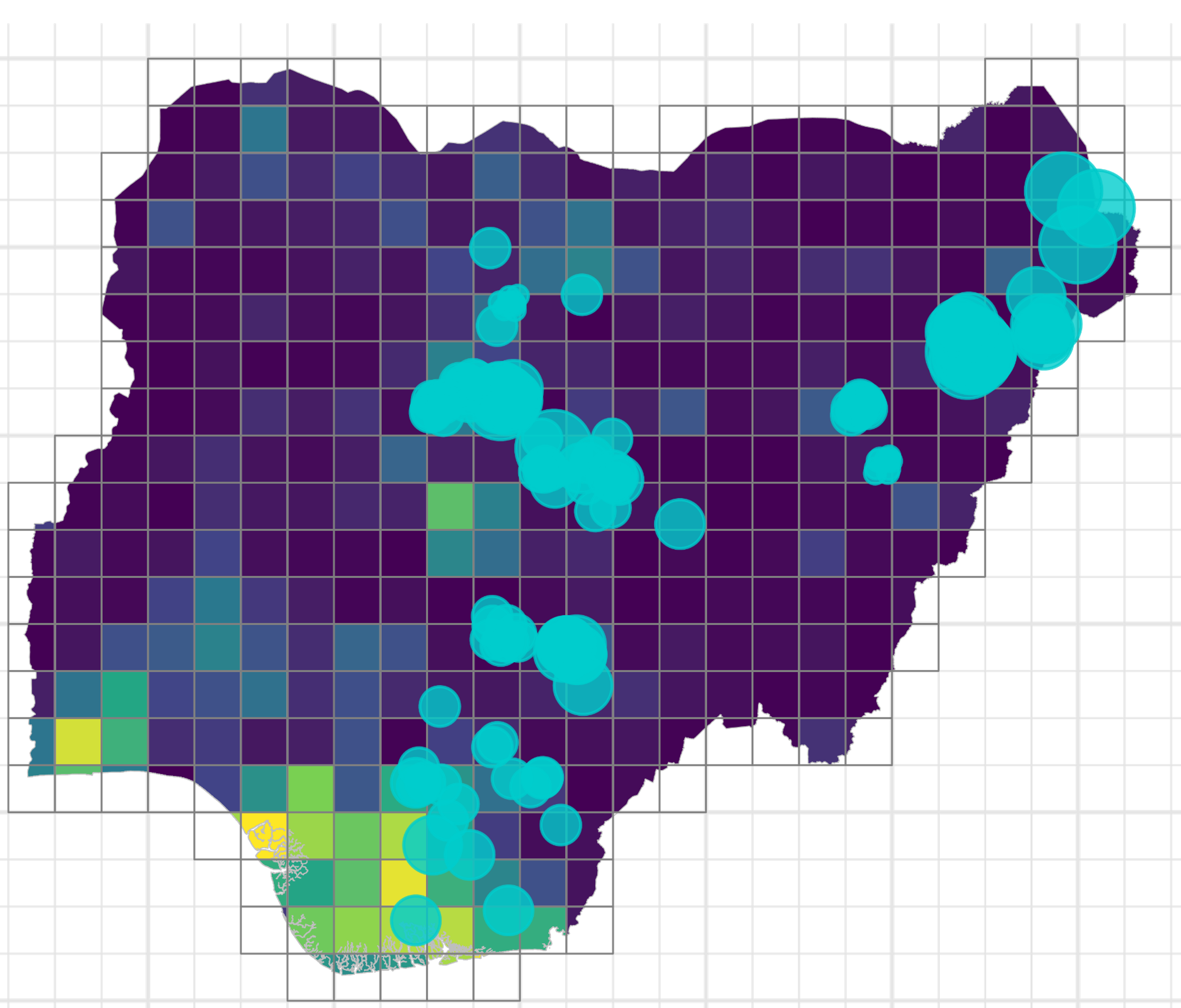
Spatial patterns of violence
In ongoing work, I explore how ethnic violence unfolds locally and how it transforms affected communities in their social, economic, and political life.
Understanding the local patterns is crucial to mitigate its effects on post-conflict reconciliation and development.
Peacebuilding
Why do some communities emerging from ethnic violence move toward renewed conflict while others achieve greater security and reconciliation?
I explore this question focusing on how international peacebuilding can mitigate violence and rebuild intergroup relations after conflict.
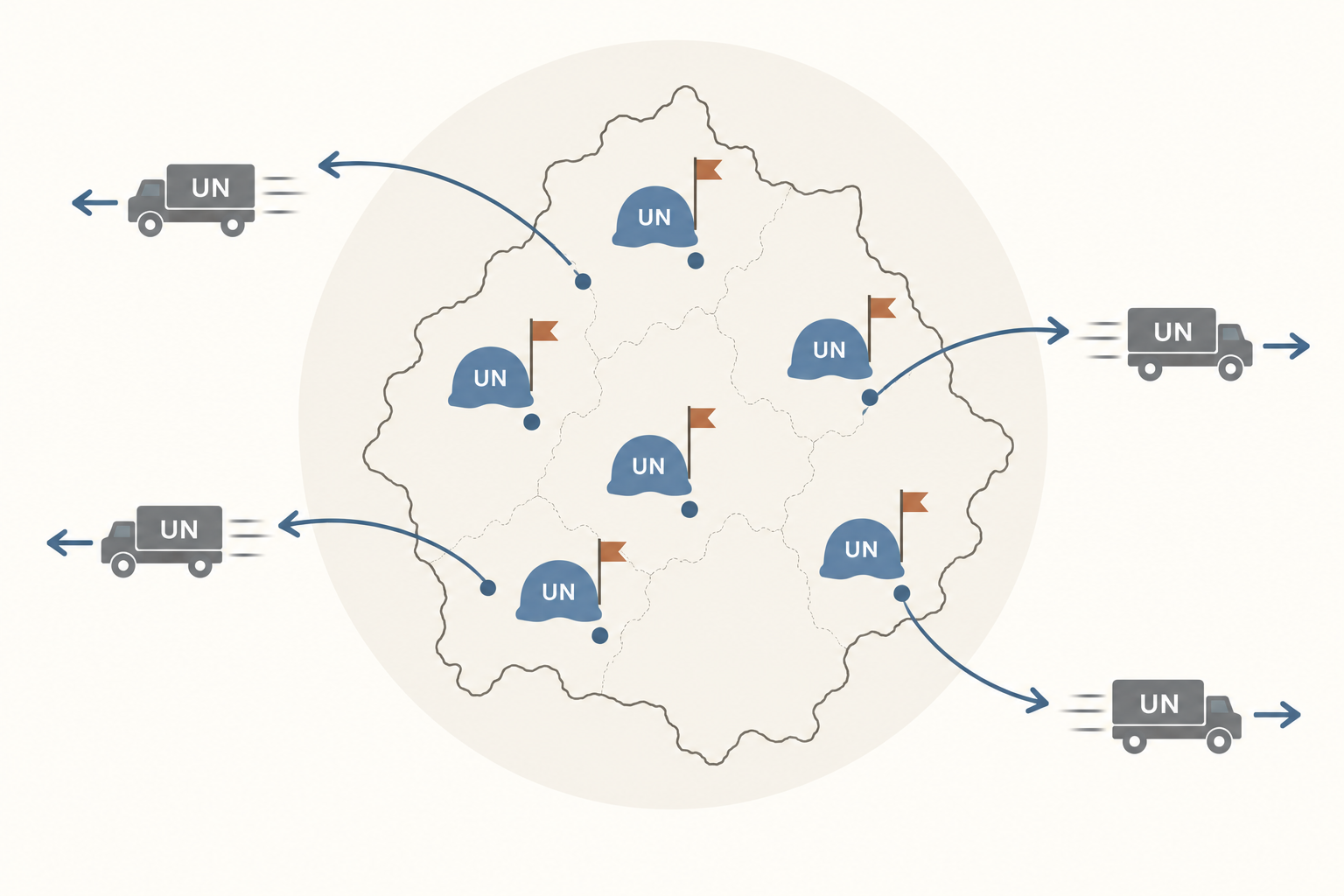
Peacekeeping withdrawal and violence during elections
While existing research has examined the effects of peacekeeper deployment, we know less about the local consequences of their withdrawal. This article examines how the phased withdrawal of UN peacekeepers affects violence during volatile election times.
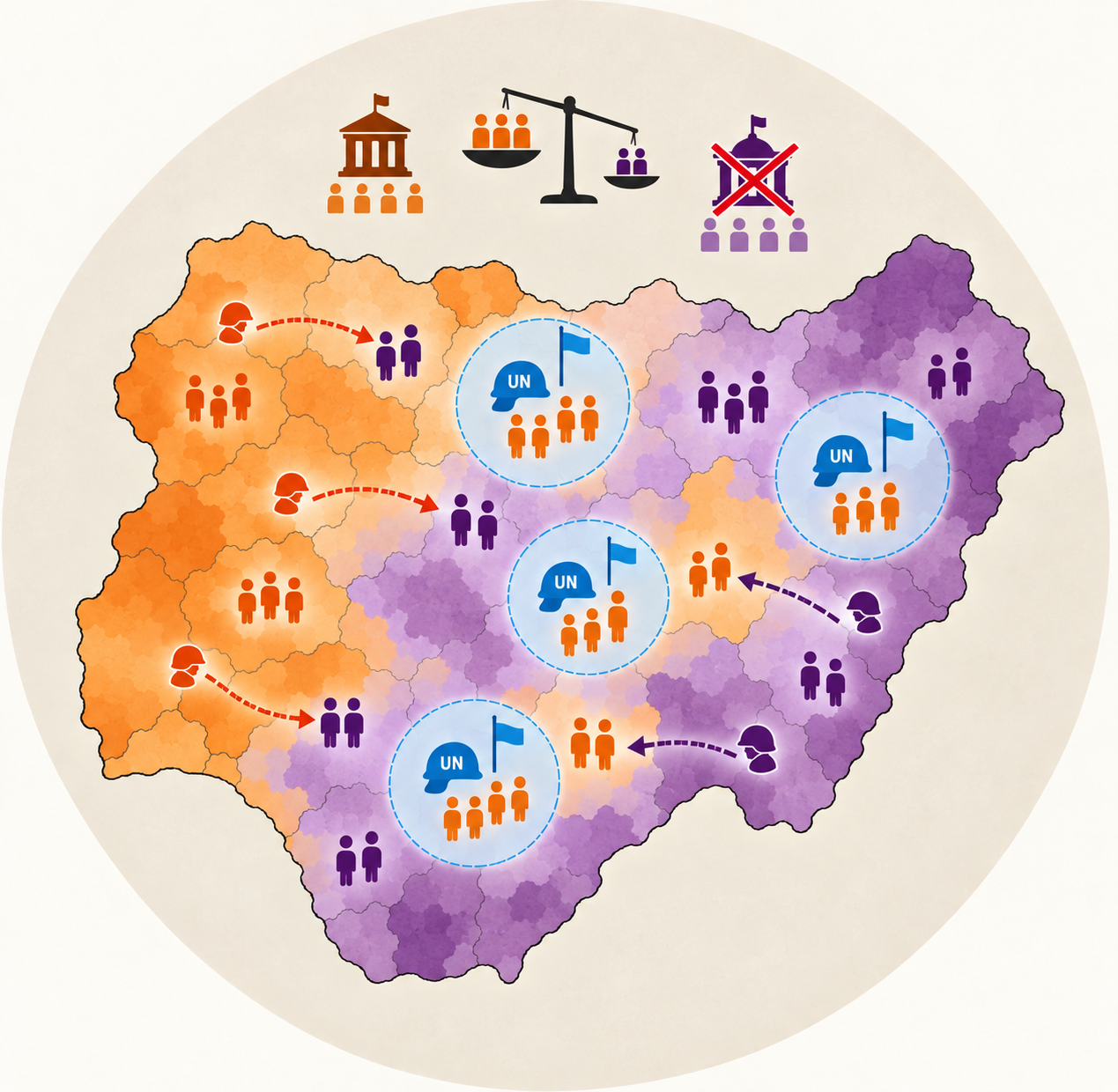
Political power and peacekeeping protection
How do ethnic inequalities shape peacekeepers’ ability to protect civilians? This project examines whether perpetrators with exclusive access to government power constrain UN mission's activities to protect civilians from ethnic one-sided violence.
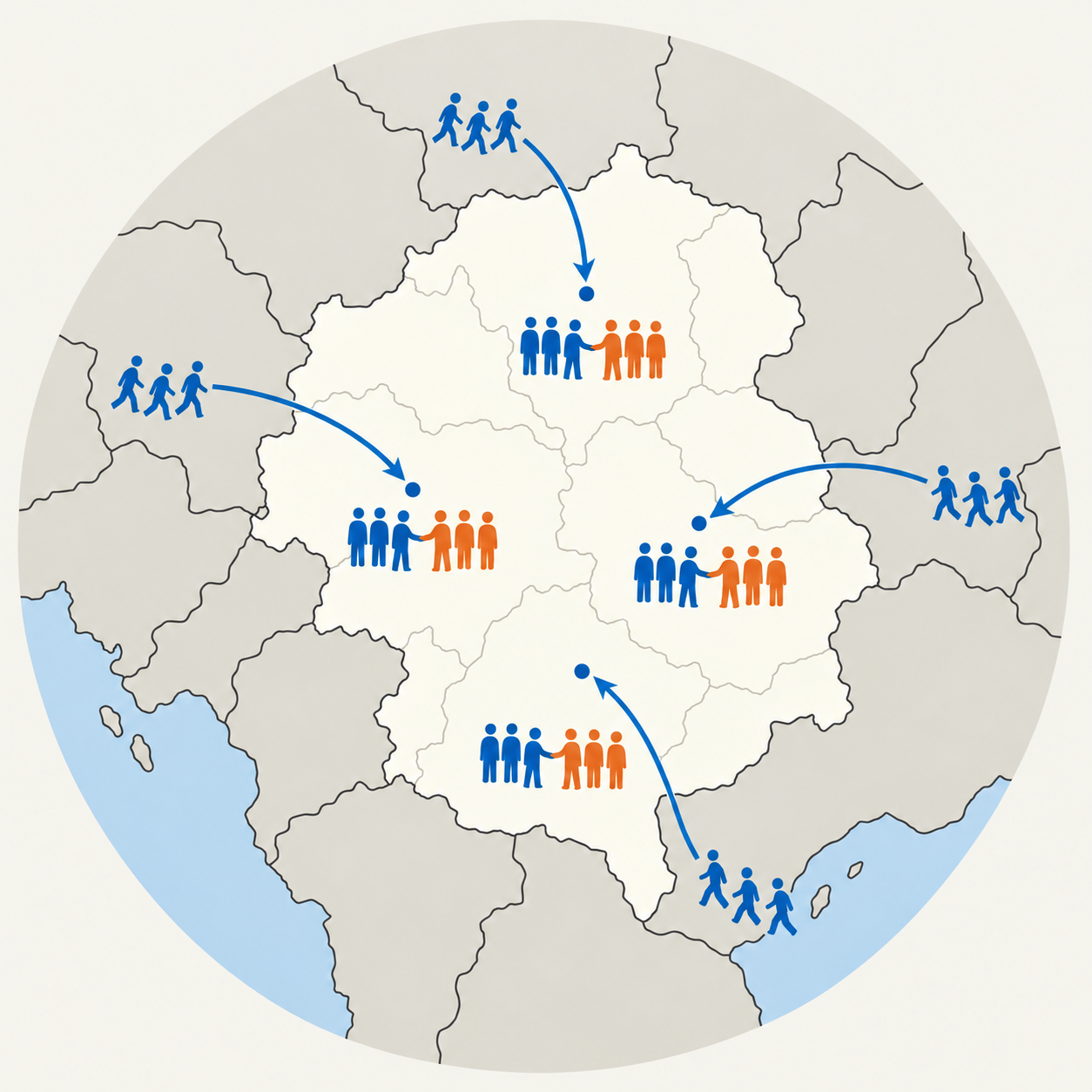
Return and reconciliation after ethnic cleansing
How can local intergroup relations be rebuilt after displaced communities return? This planned project examines whether narratives of territorial ownership, indigeneity, and foreignness shape reconciliation and renewed violence after return.
Further Collaborations
Mapping of Conflict Damage with Satellites and Deep Learning
(Project lead: Valerie Sticher, Center for Security Studies, ETH Zurich)
• Interdisciplinary project to detect and visualize conflict-related building damage
Dominant Nationalist Movements (DNM) Database
(Project lead: Andreas Juon, Aya Abdelrahman, Lars-Erik Cederman)
• Existence, demands, and justifications of Dominant Nationalist Movements across 180 countries (1816–present)
Nationalist State Transformation and Conflict (NASTAC) Dataset
(Project lead: Lars-Erik Cederman, Luc Girardin, Carl Müller-Crepon and Yannick Pengl)
• Historical ethnic power relations and nationalist claims in Europe (1815–1945)
Intergroup Contact and Exclusionary Attitudes
(Project lead: Judith Spirig, Immigration Policy Lab, ETH Zurich)
• Natural experiment on religious segregation and its effects on exclusionary attitudes at the municipal level